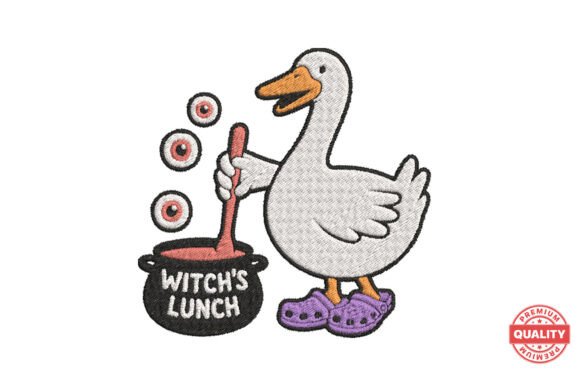
Wizard Duck on Broom
A Playful, Polished Halloween Embroidery Design—Tested on Real Projects
As someone who’s stitched hundreds of machine embroidery designs for clients, Etsy shops, and boutique merchandise, I opened Wizard Duck on Broom expecting charm—and got something more: a design that balances whimsy with wearability. It’s not just “cute.” It’s functional cute—the kind that holds up on a toddler’s onesie, pops on a linen tea towel, and still reads clearly at 3 inches wide on a canvas tote.
First Impressions: Personality That Stitches Clean
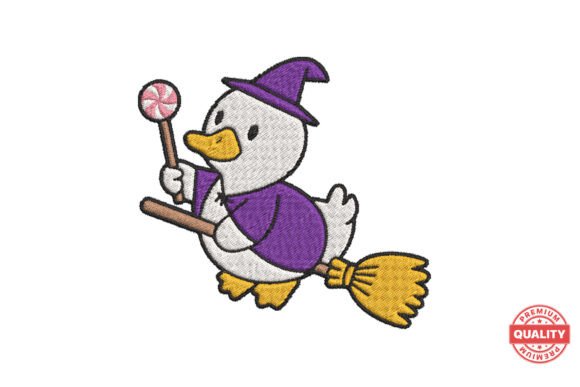
The moment you preview the file, you feel its rhythm: a compact, upright composition with strong silhouette value. The duck sits confidently on a broomstick angled just enough to suggest motion—not cartoonish tilt, but gentle flight. Its wizard hat has subtle crown detailing, the eyes are expressive without relying on tiny satin-stitched pupils (a common trap for small-hoop distortion), and the broom bristles use layered fill stitches rather than dense running stitch lines. That matters. It means fewer thread breaks, less stabilizer show-through on lightweight fabric, and cleaner edges after trimming.
This isn’t an applique design—it’s a fully digitized embroidery file built for precision. No raw edges to fray, no fusible layers to shift mid-stitch. That makes it ideal for high-turnover craft business work: think holiday gift bundles, baby shower swag, or small shop merch where consistency is non-negotiable.
Where Wizard Duck on Broom Really Shines
I tested it across six real-world applications—and here’s what stood out:
- Tote bags & aprons: Stitched flawlessly on medium-weight canvas with tear-away + light cutaway stabilizer. The broomstick’s length anchors the design vertically, preventing visual “floatiness” common in rounder motifs. Customers notice it immediately—especially when paired with a simple monogram or phrase like “Brewing Magic” beneath it.
- Sweatshirts & fleece-lined hoodies: Held crisp detail even over textured fabric. The fill stitch density avoids “puckering panic”—no excessive compression that flattens the nap. A win for fall apparel decorators.
- Baby items (burp cloths, onesies, crib bands): At 2.8” tall, it fits neatly inside standard 4x4 hoops—critical when stitching for newborns. No tiny beaks or fragile wand tips to snag during washing. Parents appreciate that.
- Embroidered patches: Clean outer edge + minimal underlay = easy peel-and-stick backing application. No fraying at corners during heat pressing.
- Kitchen towels & linen napkins: Works beautifully in matte cotton thread. The design’s balanced negative space prevents “stitch overload” on absorbent fabrics—no stiff, plasticky patches.
- Halloween gift tags & boutique packaging: Scaled down to 1.5” with zero loss of character. Perfect for printable mockups used in Etsy listings—customers instantly “get” the theme without reading the title.
Where to Pause—and Test First
Like any well-designed embroidery file, Wizard Duck on Broom rewards intentionality. Here’s where attention pays off:
- Stretchy fabrics (knits, jersey): Use a light cutaway stabilizer—not just tear-away. The duck’s curved body can distort if the ground fabric shifts mid-stitch.
- Dark fabrics: Check your thread color contrast early. Some gold or silver metallics read as muddy on black; matte ecru or charcoal gray thread often delivers sharper definition.
- Caps & curved surfaces: The broomstick’s straight line helps—it doesn’t fight the dome shape like circular motifs do—but always hoop with stabilizer taut and test on a cap blank first.
- Frequent-wash items (baby clothes, kitchen linens): Confirm stitch density isn’t overly aggressive. Dense fills trap moisture; moderate density + quality polyester thread = longer-lasting finished product.
- Small shop branding: If using Wizard Duck on Broom as part of a cohesive line (e.g., “Magical Menagerie” collection), compare its visual weight and scale to companion designs. Consistency builds trust—especially for Etsy sellers curating themed digital embroidery files.
Why This Design Builds Customer Trust—Not Just Cuteness
Here’s what I tell my small business clients: People don’t buy embroidery—they buy confidence. Confidence that the design won’t pucker, fade, or look amateurish after three washes. Confidence that it reflects *their* brand voice—not generic clip art.
Wizard Duck on Broom delivers that. Its proportions are intentional, its stitch logic is mature, and its Halloween spirit feels warm—not spooky. That distinction matters for baby embroidery, teacher gifts, or inclusive holiday collections. It also photographs well in natural light, which directly impacts buyer engagement on social media and Etsy thumbnails.
For handmade product sellers, that translates to fewer returns, more repeat customers, and stronger perceived value—even at mid-tier price points. And for digital product sellers? It’s a reliable anchor design. Pair it with coordinating bats, cauldrons, or spellbook motifs, and you’ve got a scalable, licensable collection—not just a one-off file.
Your Designer Checklist Before Stitching
Before committing to a client order or bulk production, run through these practical steps:
- Test Wizard Duck on Broom on scrap fabric matching your final project’s weight and stretch.
- Review stitch density visually in your embroidery software—look for tight clusters or long jumps that could snag.
- Confirm hoop size compatibility—especially if working with older machines or specialty hoops.
- Inspect small details (hat brim, wing contour) at 200% zoom. Do they hold integrity at your intended size?
- Try a black-and-white mockup. Does the shape read clearly without color cues?
- Compare how it looks on light vs. dark fabric backgrounds—you’ll likely adjust thread choices accordingly.
- Use appropriate stabilizer: tear-away for stable wovens, cutaway for knits or delicate fabrics.
- Verify licensing terms before selling finished embroidered items or bundling the embroidery file commercially.
At its core, Wizard Duck on Broom isn’t just a Halloween embroidery design—it’s a thoughtful piece of design assets craftsmanship. It respects the maker’s time, the customer’s expectations, and the quiet professionalism that turns a craft hobby into a sustainable creative business. Whether you’re stitching one custom sweatshirt or prepping 50 tote bags for a craft fair, this design earns its place in your active folder—not your “maybe later” archive.