Polar Bear Christmas Tree
A Festive, Flexible Design for Holiday Makers
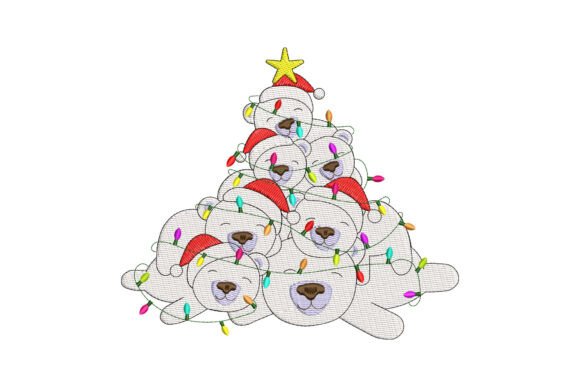
As an embroidery designer who’s built seasonal collections for over a decade—shipping to Etsy sellers, craft fair vendors, and small-batch apparel studios—I opened Polar Bear Christmas Tree with high expectations. What stood out immediately was its warm, storybook charm: a softly rounded polar bear nestled beside a slender, hand-drawn Christmas tree draped in minimalist ornaments. It’s not overly glittery or cartoonish—it lands somewhere between cozy and elegant, with just enough detail to feel intentional without overwhelming the stitch field. The emotional tone is gentle joy: think family mornings by the window, handmade gifts wrapped in kraft paper, quiet winter nights. That resonance matters—because holiday shoppers don’t just buy designs; they buy feelings, memories, and moments they want to give.
Where This Design Shines on Real Seasonal Products
Polar Bear Christmas Tree thrives where authenticity and versatility intersect. On heavyweight cotton sweatshirts? Absolutely—it reads clearly at 4–5 inches wide, balancing presence and wearability. For tote bag design, it anchors beautifully near the bottom corner or centered on the front panel, pairing well with subtle text like “Warm Wishes” or “Made With Love.” Kitchen towel embroidery gains instant charm when stitched onto the hem or corner—especially on natural linen or oatmeal terry, where the bear’s soft contours echo the fabric texture. Pillow covers become heirloom-ready with this machine embroidery design; stitch it on a neutral canvas or flax linen, and it reads as thoughtful, not trendy.
It’s also a standout for gift-ready products: embroidered patches made from this file add instant personality to denim jackets or stocking stuffers. Baby onesies and burp cloths benefit from its gentle scale and lack of sharp angles—ideal for sensitive skin and delicate laundering. And for limited edition apparel drops? Polar Bear Christmas Tree supports cohesive branding across sweatshirts, aprons, and table linens—creating visual recognition without needing matching fonts or slogans. Etsy sellers tell me their customers consistently comment on how “calm” and “special” this design feels—boosting perceived value and encouraging repeat visits during peak shopping windows.
Smart Use Cases for Your Shop Strategy
- Gift bundles: Pair a stitched kitchen towel with a matching embroidered patch and a printable mockup card—customers love ready-to-gift sets.
- Etsy listings: Use clean, natural-light photos showing the design on multiple fabrics (light and dark) to build trust and reduce returns.
- Craft fair displays: Stitch samples on varied substrates—towels, pillow covers, and baby blankets—to demonstrate range and quality at a glance.
- Social media previews: Film close-ups of the stitching process on textured fabric to highlight depth and craftsmanship—not just the final product.
- Personalized gifts: Add a small monogram or year (e.g., “2024”) beneath the tree—keeping the focus on the core design while increasing uniqueness.
Where to Proceed Thoughtfully
This isn’t a one-size-fits-all embroidery file—and that’s a strength, not a limitation. Its charm relies on clarity and balance, so use discernment in execution. Avoid cramming Polar Bear Christmas Tree into tiny hoop sizes (under 3 inches); fine branches and bear fur details may lose definition. Steer clear of dense metallic thread unless you’ve tested it thoroughly—the design’s moderate stitch density could shift under heavier thread tension. On thick towels or terry cloth, double-layer tear-away stabilizer is non-negotiable; otherwise, the bear’s outline risks sinking into the pile. Dark fabric demands careful thread color selection—test ivory, heather gray, or soft silver instead of stark white for better contrast and warmth.
Also be mindful with stretchy garments (like ribbed knit tops) and curved caps: the tree’s vertical lines can distort if hooping isn’t precise. And while it works beautifully on baby items, always verify that finished products meet safety standards for small parts—especially if adding detachable ornaments or layered elements beyond the base file.
Why This Design Builds Trust and Seasonal Momentum
Holiday shoppers scan fast—but they pause for sincerity. Polar Bear Christmas Tree signals care: in its balanced proportions, its absence of clutter, its quiet nod to nature and tradition. That builds customer trust faster than flashy graphics ever could. For small shop owners, it elevates perceived brand consistency—whether you’re selling embroidered patches, personalized gifts, or handmade home decor. It doesn’t shout “Christmas!”—it invites. And that invitation translates directly to engagement: longer site visits, saved listings, tagged social posts, and word-of-mouth referrals.
More concretely, it increases giftability. A stitched pillow cover with Polar Bear Christmas Tree feels personal but not prescriptive—unlike overt slogans or dated trends. It fits multiple generations, aesthetics, and homes. That flexibility expands your audience without diluting your voice. And because it’s designed for both beginners and experts, it supports your entire customer base—from first-time embroiderers buying their first digital embroidery file to seasoned commercial embroidery shops scaling holiday production.
Practical Designer Notes Before You Stitch
- Always test thread colors on both light and dark fabric—what reads as “soft white” on cream may vanish on charcoal.
- Check stitch density before scaling: if enlarging beyond recommended dimensions, confirm fill areas won’t become too heavy for lightweight fabrics.
- Confirm hoop size compatibility—some versions may require 5x7" or larger for optimal detail retention.
- Match stabilizer to fabric texture: cut-away for knits, tear-away for stable wovens, and heavy-duty for thick toweling.
- Create realistic mockups—not just flat templates—using natural folds and lighting to reflect how the finished product will live in real homes.
- Review small details after stitching: ensure the bear’s eyes and tree branches are crisp, especially on textured surfaces.
- Plan a cohesive seasonal palette—consider earthy greens, frosty blues, warm creams, and muted golds to extend the design’s versatility across products.
- Verify commercial licensing terms before selling finished products—this is essential for Etsy sellers and small business owners using the embroidery file in physical goods.