Love Cat: A Smart Embroidery Choice for Small Business Branding
First Impression: Friendly, Approachable, and Professionally Playful
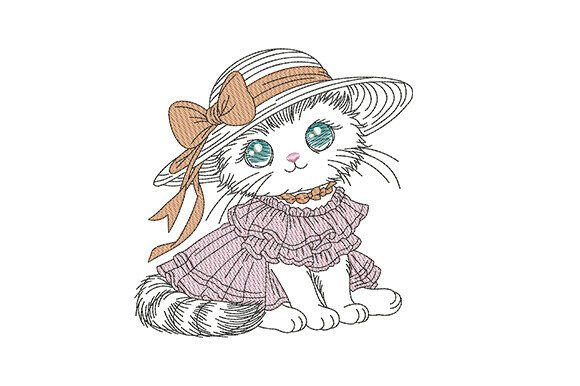
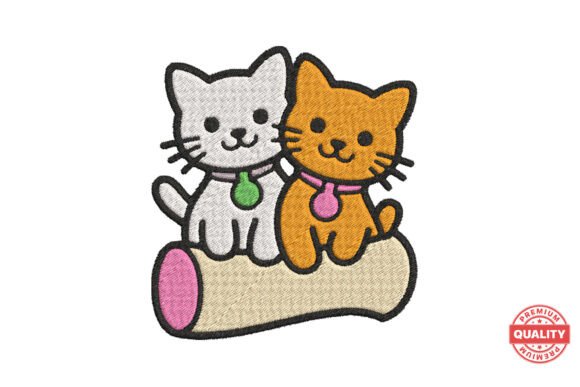
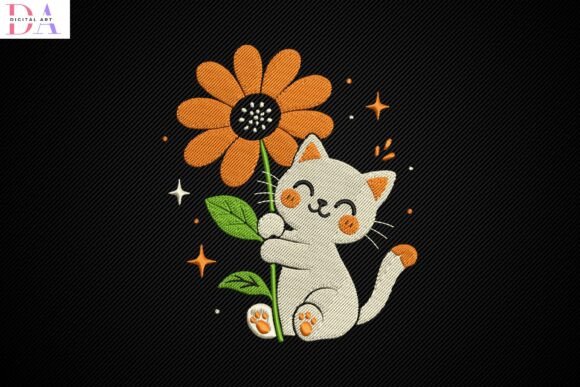
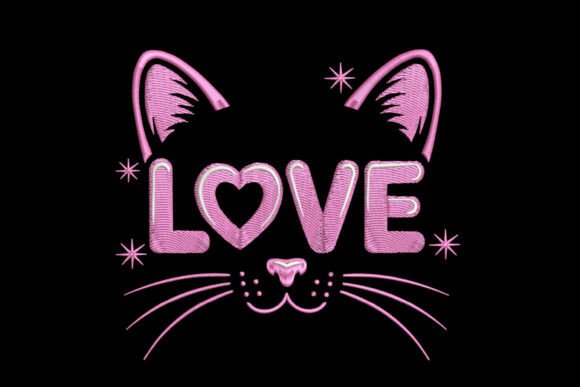
As an embroidery designer who’s developed hundreds of commercial designs for cafés, boutiques, pet brands, and handmade studios, my first reaction to Love Cat is immediate: it feels warm, intentional, and brand-ready—not just decorative. The name alone signals emotional resonance, and the description (“Easy to stitch and full of personality”) tells me this isn’t a cluttered or overly technical machine embroidery design. It suggests clean line work, balanced proportions, and thoughtful negative space—critical traits when translating charm into professional merchandise.
Real-World Performance Across Small Business Merchandise
Love Cat shines where small businesses need versatility without compromise. On embroidered patches—whether sewn onto aprons for a local bakery or ironed onto tote bags for a florist—it reads clearly at 2.5”–3.5”, maintaining its expressive character without visual noise. For staff uniforms, it works beautifully as a chest logo accent on work shirts or a subtle sleeve detail on barista or studio aprons. Its personality lands gently but memorably—never childish, never generic.
In cap embroidery, Love Cat holds up well on structured fronts when digitized with appropriate underlay and reduced density in curved zones. As a cap design, it avoids thin, fragile elements that snag or distort during wear—something I’ve seen derail dozens of otherwise lovely cat-themed embroidery files. On tote bag design applications, it scales confidently to 4”–5” without losing crispness, making it ideal for boutique merchandise or customer gifts tied to seasonal promotions.
For product packaging accents—think stitched labels on handmade soap wraps or fabric tags on ceramic mugs—Love Cat adds tactile authenticity. It supports a handmade product narrative while still feeling polished enough for premium positioning. Etsy sellers especially benefit: it elevates listings with consistent, recognizable branding across multiple items (e.g., matching aprons, totes, and gift pouches), reinforcing brand identity with every stitch.
Where to Use Love Cat Thoughtfully
Like any strong digital embroidery file, Love Cat performs best when matched to the right context. Avoid pushing it below 1.75” for embroidered patches—fine details may collapse, especially on textured fabric like canvas or twill. Cap fronts with high curvature demand careful placement; test stitching on a mock cap front before bulk production. Dark uniforms require high-contrast thread colors—navy with cream or charcoal with light grey thread ensures legibility after repeated washing.
Stitch density matters: if your version includes dense fill areas (common in playful cat faces), confirm it’s optimized for commercial embroidery machines. Overly dense fills can cause puckering on lightweight cotton tees or delicate linen blends. Likewise, avoid pairing Love Cat with ultra-fine lettering or secondary text unless the embroidery file explicitly includes coordinated fonts—visual hierarchy should support, not compete with, the design.
How Love Cat Strengthens Your Brand Identity
Small business merch isn’t just about visibility—it’s about connection. Love Cat helps build that connection through warmth and consistency. When customers see the same expressive motif on your café apron, your floral workshop tote, or your pet brand’s custom apparel, they subconsciously associate that familiarity with trust and care. That’s brand identity in action.
It also raises perceived product value. A thoughtfully embroidered Love Cat patch signals attention to detail—more than a printed logo, it says “we made this *for* you.” For handmade brands, that authenticity translates directly to buyer engagement. And because it’s versatile across categories (Cats + Embroidery = evergreen appeal), it supports long-term visual consistency without feeling repetitive.
Practical Designer Notes Before You Stitch
Before committing to production, run these checks:
- Test in black and white first. This reveals balance, spacing, and clarity—no color distractions masking weak outlines or crowded elements.
- Verify small-patch viability. Resize the embroidery file to 2” and check stitch integrity in your embroidery software. Look for gaps in curves or collapsed satin stitches.
- Review thread color contrast. Especially on dark or heathered fabrics—what reads well on screen may vanish on garment.
- Inspect spacing between key features. Does the cat’s ear clear the cheek? Is the eye shape distinct at 2.25”? Tight spacing fails fast on low-thread-count cotton.
- Confirm hoop size compatibility. If your shop uses standard 4x4 hoops, ensure Love Cat fits comfortably within that boundary—or know if larger hoops are needed for scaling.
- Test on real fabric. Run a sample on your most common substrate (e.g., canvas tote, poly-cotton blend shirt) with your go-to stabilizer. Fabric texture changes everything.
- Create a printable mockup. Clients love seeing how Love Cat looks on actual product photos—not just isolated embroidery previews.
- Compare beside other design assets. Does it harmonize with your existing logo, typography, or secondary icons? Consistency builds recognition.
- Confirm commercial licensing. Since this is a digital embroidery file intended for small business merch and client work, verify usage rights cover resale, branded patches, and custom apparel before ordering.
Ultimately, Love Cat isn’t just another cat embroidery—it’s a strategic branding tool. It bridges playfulness and professionalism, handmade charm and commercial readiness. For embroidery shops digitizing for local clients, for Etsy sellers building cohesive collections, and for creative studios launching their first line of custom apparel, it’s a reliable, expressive, and scalable asset. Just remember: even the friendliest cat deserves smart execution. Test, refine, and stitch with intention—and let Love Cat do the rest.