Funny Santa Claus: A Designer’s Real-World Embroidery Review
First Impression: Playful, Not Precious
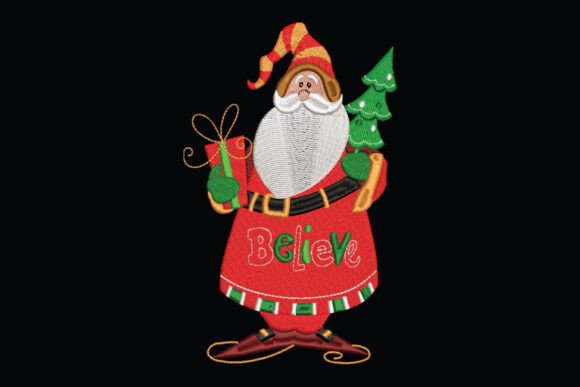
When I opened the Funny Santa Claus machine embroidery design, I didn’t see a stiff, stocky holiday icon—I saw personality. It’s got that slightly lopsided grin, a twinkle in one eye, and a cheeky tilt to the hat brim. The shape reads clearly at a glance: compact enough for a tote bag front or baby onesie chest, but detailed enough to hold interest up close. No overwrought scrollwork or fussy shading—just confident line work, smart use of satin stitch for the belt and buttons, and subtle fill stitch texture in the beard that suggests fluff without drowning the design in density. This isn’t a “museum piece” embroidery file. It’s made for smiling customers, not silent admiration.
Where It Shines: Real Projects, Real People
Last week, I stitched Funny Santa Claus onto a natural canvas tote for a local boutique’s holiday pop-up. We paired it with cream thread on off-white fabric—no contrast tricks, just clean readability. Customers paused. They pointed. They laughed—not at the design, but *with* it. That’s the win: this isn’t just Christmas decoration; it’s conversation-starting handmade product energy.
It works especially well on mid-weight fabrics where stitch definition stays crisp: cotton twill aprons, fleece-lined sweatshirts, linen tea towels, and structured pillow covers. On a soft cotton baby blanket? Yes—but I used lightweight tear-away stabilizer and reduced top tension slightly to keep the beard fill from pulling. As a custom apparel motif, it lands perfectly centered on a unisex crewneck or left-chest on a denim jacket. And for Etsy sellers bundling digital embroidery files, Funny Santa Claus is a strong anchor—it pairs easily with coordinating snowflakes or “Naughty List” text files without visual competition.
Where to Pause (and Plan Ahead)
This design doesn’t love chaos. On highly textured fabrics like bouclé or thick terry cloth, the fine details—the wink, the stitching on the boot cuff—can blur. On stretchy knits (think ribbed holiday tees), skip direct hooping; use cutaway + topping, and consider simplifying the beard fill area if your test run shows puckering. Dark fabrics demand careful thread selection: a warm charcoal gray instead of black keeps the facial expression legible, and avoid pale golds that vanish on navy.
Curved surfaces—like the front panel of a dad cap—require repositioning the design so the face stays upright and proportional. I wouldn’t push it into a 3-inch hoop without checking the original file’s bounding box first; tight corners on the hat brim or belt buckle could clip or distort. And while the lettering isn’t part of this particular design, if you plan to add custom names or dates nearby, leave breathing room—the Funny Santa Claus layout already occupies visual real estate confidently.
What It Adds (and Doesn’t Add) to Your Product
Stitched well, Funny Santa Claus lifts perceived value instantly. It signals craftsmanship—not because it’s technically difficult, but because it feels intentional and human. Buyers don’t buy “a Santa.” They buy warmth, wit, and a little irreverence in a season full of polish. That translates directly to giftability: parents choose it for baby’s first holiday onesie; coffee shops use it on barista aprons; craft fairs see quick turnover on matching mug cozies and oven mitts.
But it won’t carry weak branding. If your shop voice is minimalist or ultra-luxury, this design may clash—its charm is approachable, not austere. It also doesn’t scale down to 2 inches without losing its spark. Keep it above 3.5 inches wide for best impact. And remember: personality only reads when stitching clarity holds up. That means no skipping the test sew.
Designer Notes You’ll Actually Use
- Always test first—on scrap fabric *identical* to your final project, with the same stabilizer and thread.
- Check stitch density visually: does the beard look solid but not stiff? Does the red hat saturate evenly, or does it shimmer patchily?
- Review small details under magnification: the eye wink, the belt buckle curve, the toe of the boot. If those read cleanly, the rest will too.
- Mock it up digitally in both light and dark backgrounds—don’t rely on how it looks on white preview screens.
- Confirm licensing before listing as a finished product or bundled digital embroidery file. “Easy to stitch” doesn’t mean “automatically commercial-use.”
- For layered garments (like an embroidered patch on a denim jacket), verify the design’s height clears seam allowances and pocket edges.
Final Thought: It’s Not Just Holiday—It’s Human
I’ve stitched dozens of Santas—regal, retro, pixelated, vintage. Funny Santa Claus stands out because it remembers embroidery is tactile, personal, and often joyful. It doesn’t try to be everything. It’s not an applique design begging for fabric scraps, nor a dense fill-stitch landscape demanding hours. It’s a focused, friendly, finishable embroidery project that serves the maker *and* the wearer. Whether you’re prepping holiday gifts for your craft business, building a cohesive Etsy collection, or just want to laugh while threading your needle—this one earns its place in your design assets. Just treat it like a collaborator: respect its limits, highlight its strengths, and let it do what it does best—make people smile, stitch after honest stitch.