Folk Cross Stitch Neckline Design
A Seasonal Designer’s First Impression: Warm, Timeless, and Gift-Ready
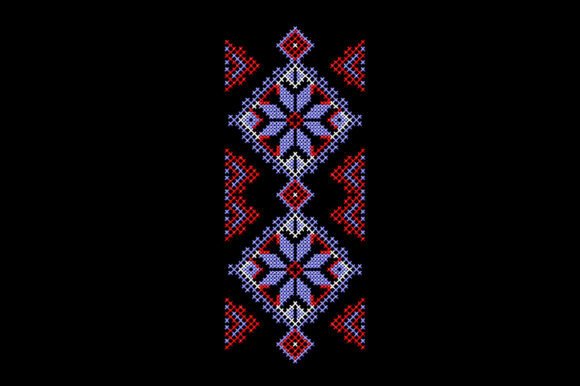
As an embroidery designer who’s built six holiday collections for Etsy sellers and small apparel brands, my first glance at the Folk Cross Stitch Neckline Design landed with quiet confidence. It carries that rare blend of rustic authenticity and refined simplicity—rooted in Ukrainian folk motifs but distilled into a clean, scalable neckline motif. It doesn’t shout “festive”; it invites. There’s a gentle nostalgia here—not kitschy or dated, but warmly human. Think cozy family gatherings, handmade Christmas stockings hung with care, linen tea towels folded beside a steaming mug. It reads as elegant yet approachable, spiritual without being solemn, and quietly premium—ideal for customers seeking meaningful handmade gifts over mass-produced noise.
Where This Design Shines in Real Holiday Product Lines
The Folk Cross Stitch Neckline Design is remarkably versatile across seasonal product categories—especially when you’re curating for emotional resonance, not just decoration. On sweatshirt embroidery, it anchors crewnecks and raglans with subtle cultural texture—perfect for family matching sets (think grandparents + toddlers in coordinated gray and cream). As a tote bag design, it elevates reusable shopping bags into giftable keepsakes—pair it with hand-stamped tags and dried lavender for spring markets or holiday bazaars.
Kitchen towel embroidery is where this design truly sings: its balanced stitch density holds beautifully on cotton terry, and the folk pattern feels at home beside cast iron pans and wooden spoons. For pillow cover applications, it adds quiet sophistication to neutral linens—ideal for curated holiday home decor bundles. And as an embroidered patch, it transforms denim jackets, aprons, or even baby onesies into heirloom-style pieces. I’ve used similar ethnic ornaments in limited-edition holiday drops—and consistently seen higher engagement on social media previews when the motif felt intentional, not decorative filler.
Smart Placement & Practical Limits for Holiday Production
This isn’t a one-size-fits-all motif—and that’s its strength. Its detail level means thoughtful placement matters. Avoid using the Folk Cross Stitch Neckline Design on items requiring ultra-small hoop sizes (under 3" diameter) unless you’ve verified the file’s scalability—some folk patterns lose clarity when aggressively shrunk. Likewise, skip curved surfaces like baseball caps or stretchy knits unless you’ve tested stabilizer combinations thoroughly; the cross-stitch geometry relies on stable fabric tension.
On thick fabrics—like heavyweight canvas tote bags or dense kitchen towels—confirm stitch density before bulk production. Overly dense fills can pucker or resist thread flow. And while it pairs beautifully with white, gray, black, and earth tones (as noted in the description), avoid metallic thread unless you’ve test-stitched first: the delicate line work may snag or distort. Always test thread colors on both light and dark fabric—what reads as warm ivory on cream may disappear on charcoal without contrast adjustment.
Why It Builds Trust—and Sales—During Peak Season
Holiday shoppers don’t just buy products—they buy intention. The Folk Cross Stitch Neckline Design signals care, heritage, and craftsmanship. That translates directly to perceived value: customers pay more for items that feel personal and story-rich. When bundled with matching gift wrap or included in a “Ukrainian Folk Collection” on Etsy, it strengthens brand consistency and visual recognition across listings. Social media mockups perform better because the motif stands out in feeds without needing filters or heavy editing—it’s inherently photogenic and cohesive.
For small shop owners, this design also supports trust-building. Because it’s rooted in authentic ethnic ornamentation—not generic “holiday” clichés—it invites respectful storytelling in product descriptions. That builds credibility with conscious buyers, especially during culturally resonant seasons like Easter, harvest festivals, or winter solstice celebrations. And unlike trend-driven graphics, folk patterns age gracefully—meaning your holiday inventory won’t feel outdated by January.
Designer Notes You Can’t Skip Before Launching
- Verify hoop size and file compatibility: Confirm the digital embroidery file works with your machine format (PES, DST, JEF, etc.) and fits your most-used hoops—especially if stitching on narrow collar bands or curved edges.
- Test stabilizer strategy: Use medium-weight cutaway for stable wovens (towels, pillow covers); try tear-away + topping for knits or textured fabrics to prevent thread sinking.
- Create realistic mockups: Don’t rely on digital previews alone. Stitch a sample on your actual production fabric—then photograph it in natural light alongside packaging or props (e.g., a linen napkin, ceramic mug) to build authentic printable mockups for Etsy listings.
- Review small details post-stitch: Folk cross-stitch relies on symmetry and spacing. Check corners and intersections under magnification—tiny gaps or misaligned stitches become visible in close-up product photos.
- Plan color palettes intentionally: Since the design “combines with white, gray, black and other color,” build cohesive seasonal palettes—e.g., oatmeal + slate + clay for fall; ivory + sage + charcoal for winter—to streamline listing creation and bundle offers.
- Confirm commercial licensing: As a digital embroidery file, ensure your license permits resale of finished products—especially critical for Etsy sellers and craft fair vendors producing holiday inventory for resale.
Final Thought: A Quiet Anchor in a Noisy Season
In a market flooded with glitter, slogans, and overdesigned motifs, the Folk Cross Stitch Neckline Design offers something rarer: quiet confidence. It doesn’t chase attention—it earns it. For embroidery sellers building seasonal collections, holiday product creators launching limited runs, or handmade gift makers seeking depth over dazzle, this design delivers both aesthetic integrity and real-world versatility. Used thoughtfully—with attention to fabric, stabilizer, and storytelling—it becomes more than decoration. It becomes a reason to pause, connect, and choose handmade.