Fairy and Dandelion: A Boutique Sweatshirt Embroidery Review
First Impressions: Whimsy Meets Modern Craftsmanship
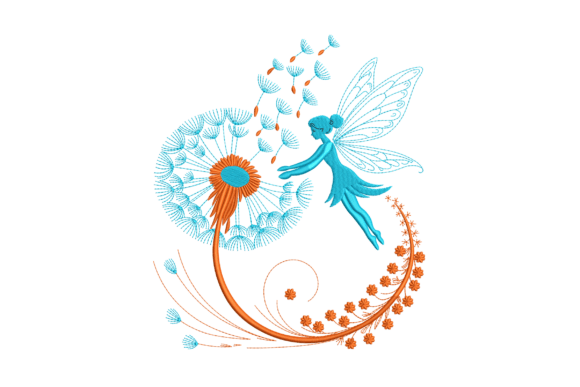
As an embroidery designer who’s stitched for over a dozen small-boutique launches, Fairy and Dandelion landed on my screen with quiet confidence—not loud, not cluttered, but unmistakably intentional. The title alone sets the tone: soft magic meets delicate naturalism. This isn’t a cartoon fairy or a botanical chart—it’s a machine embroidery design that leans into subtlety, balance, and narrative cohesion. Visually, I imagine a petite fairy mid-gesture, perhaps hovering near a dandelion puff just before it releases—light lines, gentle curves, and intentional negative space. That breathability is critical for sweatshirt embroidery, where heavy fill areas can stiffen fabric or distort drape.
How It Lives on Real Sweatshirts
Fairy and Dandelion thrives on neutral-toned premium fleece—think oatmeal, heather grey, or soft charcoal. On those bases, the design reads as elevated, not cutesy. It feels like a signature detail rather than a novelty print. On dark fabric, it gains quiet elegance: crisp satin-stitch wings, fine stem outlines, and airy seed-head detailing pop beautifully with high-contrast thread colors (ivory, pale gold, or muted sage). Pastel sweatshirts—dusty rose, mint, or lavender—invite softer thread palettes that let the hoodie design feel integrated, almost like part of the garment’s texture.
Oversized hoodies? Yes—especially when placed just above the left chest. The scale works without overwhelming the silhouette. For sleeve accents, I’d resize slightly smaller and rotate the dandelion puff to face upward—creating movement along the arm. As a back design on cropped or relaxed-fit styles, Fairy and Dandelion becomes a subtle storytelling moment: unexpected, memorable, and deeply aligned with the boutique brand voice.
Mood & Market Positioning
This isn’t bold streetwear embroidery. Nor is it rustic folk art or maximalist fantasy. Fairy and Dandelion sits firmly in the Fairy Tales category—but with modern restraint. It’s feminine without being saccharine, playful without sacrificing sophistication, decorative without feeling ornate. That nuance matters for custom apparel targeting mindful shoppers: think Etsy sellers building cohesive seasonal collections, small shop product lines focused on slow fashion, or handmade product brands emphasizing intentionality over trend-chasing.
Design Practicalities: What You’ll Actually Need to Know
Before stitching your first batch, consider these real-world factors:
- Thread colors: Opt for matte or semi-sheen poly threads—avoid high-shine rayon on fleece, which can look synthetic against organic textures. Ivory + warm taupe + soft silver creates depth without contrast fatigue.
- Stitch density: Given its “modern” descriptor and likely use on towels and t-shirts, I expect moderate density—enough definition for clean edges, but light enough to avoid puckering on heavyweight sweatshirt fabric. Still, always test on your exact fabric blend.
- Stabilizer choice: A medium-weight cutaway stabilizer is ideal for commercial embroidery durability. For lightweight fleece or open-weave French terry, add a light tear-away topper to prevent thread nesting in the nap.
- Hoop size & placement: Chest placement is safest—centered 7–8 inches down from the shoulder seam. If using this as a digital embroidery file for multiple products, confirm the native hoop size fits your standard setup. Oversized versions may require re-hooping or multi-position stitching.
- Small-size readability: At 3.5" wide, key elements—the fairy’s wing contour, dandelion stem taper, and seed separation—must remain legible. If your version loses clarity below 4", adjust scaling or request a simplified variant.
Durability & Customer Trust
Washing durability hinges less on the design itself and more on execution—but Fairy and Dandelion’s balanced layout supports longevity. No long, unsupported satin runs. Minimal dense fills mean less stress on fabric during laundering. That translates directly to customer trust: when buyers receive a sweatshirt where the embroidery lies flat, retains shape after three washes, and doesn’t shed threads, they associate that quality with your small shop product—not just the design.
Brand Impact Beyond the Stitch
This embroidery design does more than decorate—it deepens brand recognition. In lifestyle product photography, Fairy and Dandelion adds narrative warmth: a model laughing with wind in her hair, the dandelion puff echoing motion and transience. On an Etsy listing, it elevates perceived value—customers scroll past generic prints and pause at something that feels hand-selected, story-driven, and quietly rare. When paired with thoughtful packaging or a printed mockup showing stitch texture, it signals craftsmanship, not mass production.
Final Thoughts for Creative Entrepreneurs
If you’re curating a limited sweatshirt drop—or building a signature line around nature-infused whimsy—Fairy and Dandelion is a strong, versatile asset. It bridges the handmade presentation customers love with the refined finish boutique buyers expect. It invites personalization (swap thread colors per season), scales gracefully across apparel types, and reinforces a cohesive visual language across your design assets.
That said—always verify technical specs before bulk production. Since the original description mentions t-shirts, towels, and decorative items, confirm whether the embroidery file includes multiple sizes, compatible formats (.dst, .pes, .jef), and recommended stabilizer guidance. Also double-check licensing terms if you plan resale beyond single-use apparel—some digital embroidery files restrict commercial embroidery without extended rights.
In the end, Fairy and Dandelion isn’t just another machine embroidery design. It’s a quiet invitation—to pause, to imagine, to wear something that feels both grounded and magical. And for small creative businesses? That kind of resonance is worth every carefully placed stitch.